
Hairline and shrinkage cracks
Shrinkage cracks form as concrete cures. HUD’s inspection guide rates them rarely serious. They tend to be thin and unchanging, but they can seep, so a leaking one gets sealed.
Typical cost in Kirkland
Kirkland Foundation Repair reads and repairs cracks in foundation walls, stem walls and basement walls in Kirkland. The first question is what kind of crack it is, because a hairline left by curing concrete and a crack that is widening call for different responses.
Walls in Kirkland have decades of weather behind them: the median house dates from 1984 and about 44 percent were built before 1980. We cover Kirkland, with Kenmore and Clyde Hill nearby.
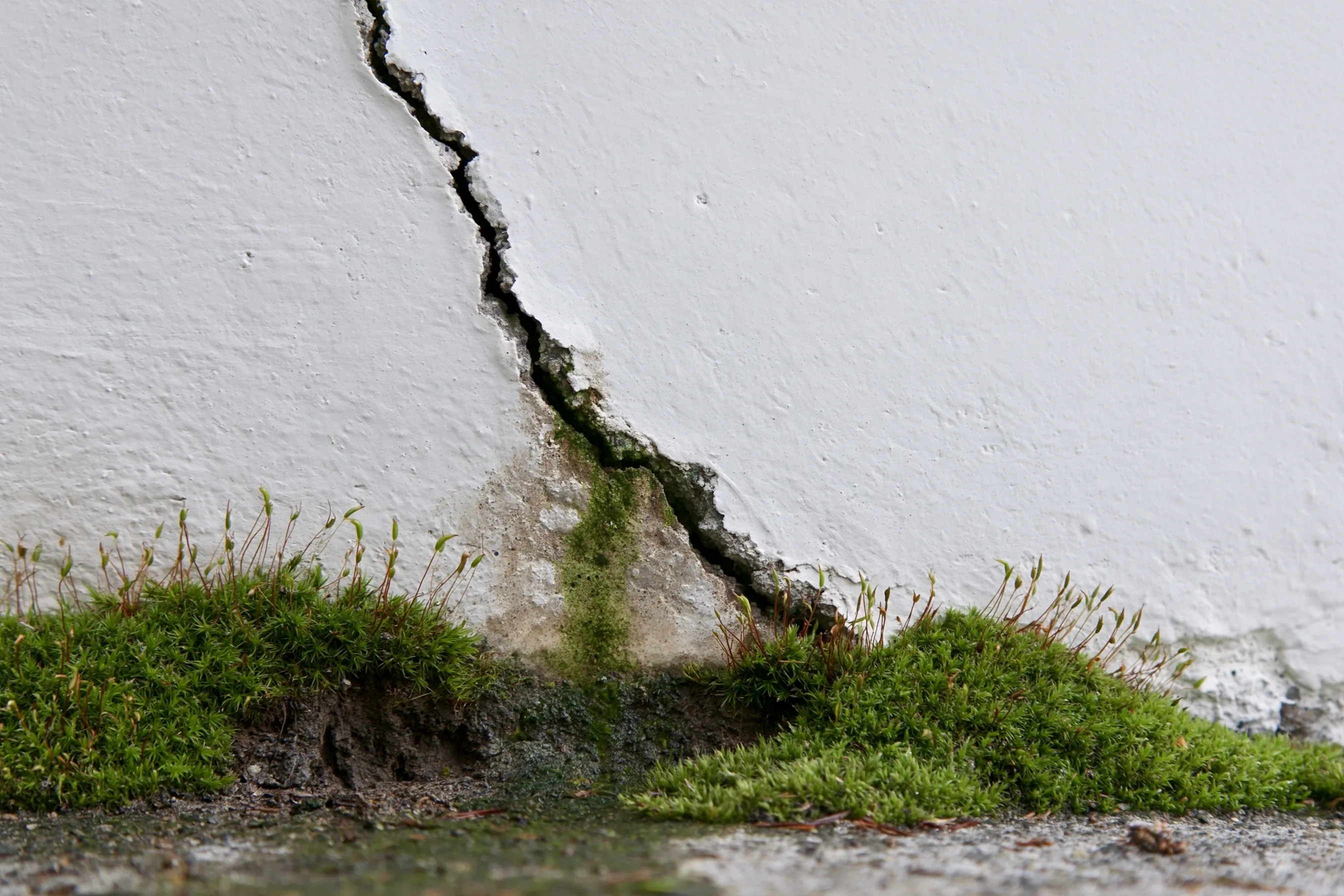
Shrinkage cracks form as concrete cures. HUD’s inspection guide rates them rarely serious. They tend to be thin and unchanging, but they can seep, so a leaking one gets sealed.
A crack that tapers can indicate differential settlement, the HUD guide says, where one part of the foundation has dropped relative to another. Cracks that start at a window or door corner and run diagonally belong in this group. Sealing one without learning why it opened treats the symptom.
On block and brick walls, a horizontal or sweeping crack can come from poor backfill, from heavy vehicles shaking the ground near the wall, or from saturated soil pushing against it, according to HUD. A stair-step crack follows the mortar joints of a block wall and is worth asking an engineer about.
Sealing is about the path water takes through the wall. A crack can be closed on the surface or filled by injecting a resin into it, and the choice depends on the width, the wall and which side is reachable. Neither method is a structural repair, and neither promises a watertight wall.
HUD notes that waterproofing coatings are designed to bridge nonstructural cracks only up to 1/16 inch. The number describes what a coating can span. It cannot sort structural cracks from harmless ones, and a thin crack is not automatically a safe one.
A crack wider at one end is tied by HUD to differential settlement, and HUD says to ask an engineer about the cause. Widening cracks, sticking doors and sloping floors are reasons to do that before sealing. According to HUD’s guide, settlement usually happens over time, so there is typically time to find the cause and plan the fix. None of this is a Washington permit rule.
One extension guide points at the top of the wall: when floor joists are not properly connected to it, the wall is free to move and cracks can be severe. A visible gap at the sill, or a wall that leans, should be mentioned on the first call.
Crack repair is quoted after the wall is seen. The number of cracks and their length matter, as does whether the wall can be reached from the inside, the outside or both, and whether soil has to be dug away. An engineer’s review, or a permit in a critical area, adds its own steps.
Kirkland’s permit page notes that permit exemptions do not apply in areas of flood hazard, wetland, steep slope, shoreline or other land use critical areas. If the wall with the crack sits on a steep lot, near a shoreline or in a wet area, ask the Development Services Center whether the repair needs a permit before work starts.
Where a crack leaks, ask where the water is coming from. Roof runoff, grading around the house and the footing drains are the usual places to look, and foundation drainage covers them.
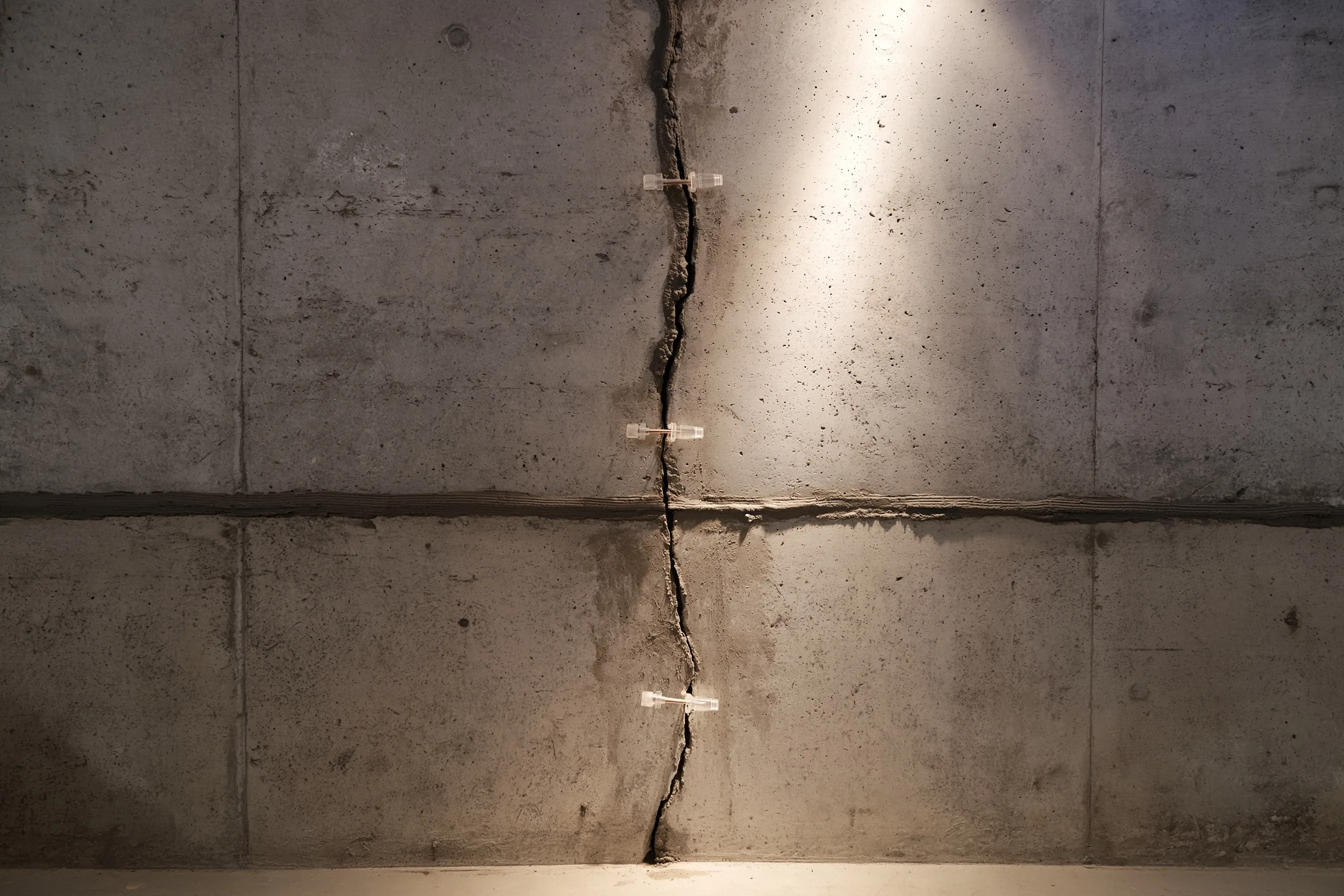
A small hairline that leaks can be sealed, but sealing hides the question of why it opened. If the crack is wider at one end, horizontal or growing, have the cause looked at first.
No. Some cracks come from curing and shrinkage, some from water or soil pressure against the wall, and some from settlement. The shape and any change over time help sort them.
Not by itself. A moving crack, a leaning wall or a floor that is dropping is a reason to call someone promptly. A thin crack that has not changed is not an emergency.
A wall that has moved sends you to foundation settlement and piering, and other services can be found through the Kirkland Foundation Repair home page.
Give the crack’s location, rough length and width, and whether it is inside or out, leaks, or has changed. We'll get back to you soon with an estimate or any questions we have. Estimates are free and there's no obligation.
Call (425) 522-5661