
Surface water
Rain finds the foundation when soil slopes toward the house, a flower bed sits flat against the wall or a patio tilts inward. HUD’s foundation guide says surface water must be led away from buildings by appropriate grading.
Typical cost in Kirkland
Wet crawlspaces, damp basement walls, tired footing drains and roof runoff that lands beside the house all come under foundation drainage, which Kirkland Foundation Repair handles for Kirkland homes. The concern is what the water does to the foundation, not how the yard looks.
We cover Kirkland, with Kenmore and Clyde Hill nearby. Kirkland’s houses range from 1960s ramblers to newer builds; about 25 percent were built in 2000 or later.
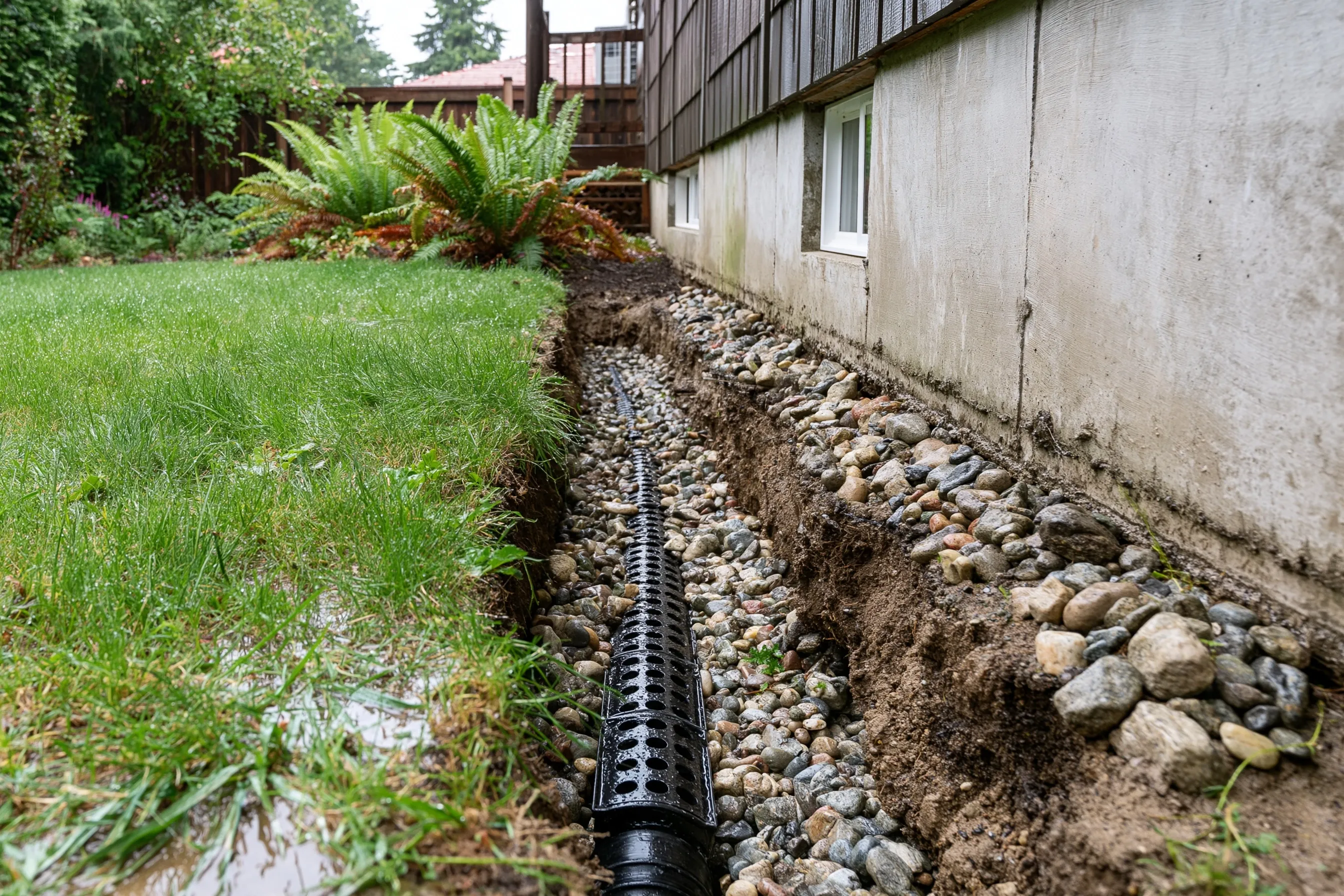
Rain finds the foundation when soil slopes toward the house, a flower bed sits flat against the wall or a patio tilts inward. HUD’s foundation guide says surface water must be led away from buildings by appropriate grading.
A Minnesota extension guide lists missing slope away from the foundation and a poor gutter and downspout system among the causes of wet foundations. A downspout that discharges at the wall, or into a clogged line, puts roof water beside the footing.
Beneath the surface, footing drains may be missing, undersized or blocked. HUD cautions that existing ones may not be adequately sized or functioning, and a university extension guide lists absent or failed systems among the problems. A drain from the original build can only be judged with a camera or a flush test.
Water does three things to a foundation, per HUD: it moves fines out from under the footing, it lowers the soil’s cohesion so the footing settles, and it presses on walls and floors with hydrostatic pressure. Cracks and displacement can follow. Drainage is part of the cause in some foundation problems and bears on whether a repair holds.
Crawlspaces add a second reason. Building America calls bulk water the dominant moisture source in a vented crawlspace, arriving through grading, perimeter drainage or gutters and downspouts, so a ground cover alone leaves standing water in place.
An exterior footing drain is a perforated pipe in washed gravel at the footing, installed by digging down the outside of the wall. An interior drain runs along the base of the wall inside the crawlspace or basement to a sump basin. Access, depth and what is outside the wall decide between them.
Which code requirements apply to a footing drain at an address is for the Development Services Center to say.
The least invasive steps come first: clear gutters, extend or pipe downspouts away from the wall, and regrade the soil next to the foundation so water runs away. These cost little compared with excavation, and they are checked before any excavation. A buried footing drain is only worth installing alongside a sound way for the roof water to leave the lot.
The route after the downspout matters on a sloped lot: water can end up on a neighbor’s property, against a retaining wall or on a slope. Kirkland’s rules are below.
Price follows the length of wall to be drained, the depth of the footing, whether the drain runs inside or outside, how far water must travel to a discharge point and how much surface has to be restored. A camera inspection of an existing drain, or an engineer’s opinion on a slope, is separate.
Kirkland’s permit page lists soil removal or fill over 50 cubic yards, or fill that changes the course of drainage, as needing a permit. Regrading beside a foundation can reach that line if it redirects water. Whether installing a footing drain needs a permit is for the Development Services Center to say.
The same page says exemptions do not apply in critical areas such as steep slopes, shoreline and wetland. If water leaving your lot crosses a slope, ask before digging. Kirkland’s zoning code addresses landslide and erosion hazard areas, and erosion control is handled in other city codes.
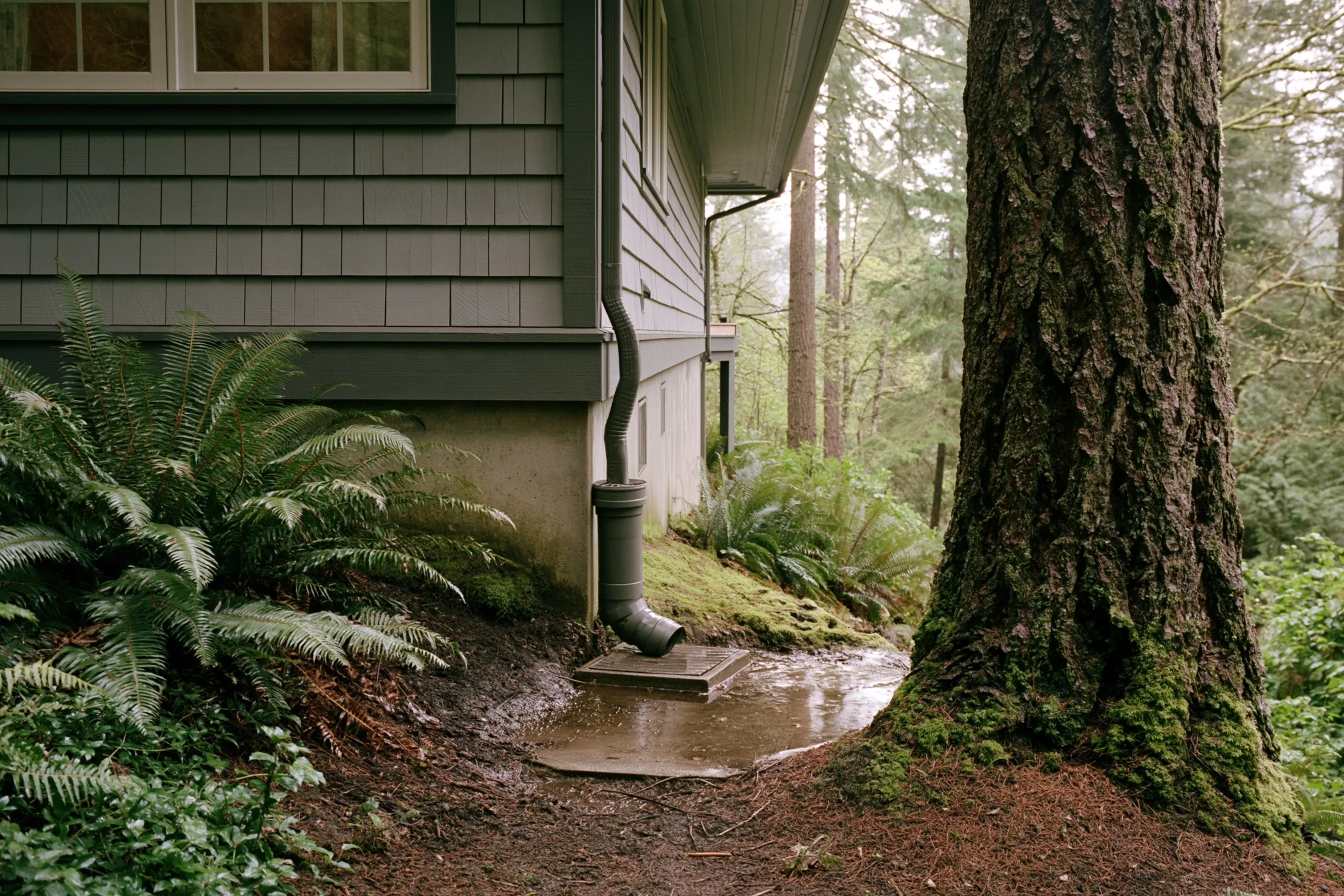
Wet crawlspaces have several possible sources. Building America names poor grading, missing perimeter drainage and failing gutters or downspouts. A leaking pipe is another, and it has nothing to do with the foundation.
Not always. Where the water is coming from decides it. Gutters, downspouts and grading are checked before anyone digs.
No. It reduces water and soil pressure at the wall, which is meant to help a repair last, but it does not close a crack or correct settlement already there.
The aftermath of water splits two ways: foundation crack repair for the concrete and crawlspace post and beam repair for the framing. The Kirkland Foundation Repair home page shows our other services.
Which way does the lot slope, where do the downspouts end, and where does the water show: crawlspace, basement wall or yard? Add whether it appears after rain or all year. We'll get back to you soon with an estimate or any questions we have. Estimates are free and there's no obligation.
Call (425) 522-5661